
No Public Tennessee Warrant Search
Tennessee has no public statewide warrant-search portal in the researched official sources. NCIC and similar law-enforcement databases are not self-search services. State failure-to-appear or license procedures can exist, but those systems do not replace the court that issued the process.
For Lewis County, call the sheriff and the court named on the paper. A statewide criminal-history or custody search cannot clear a local warrant or prove that no court action exists.
Image source: Tennessee Courts criminal-procedure rules index, which lists arrest, capias, and search-warrant rules.
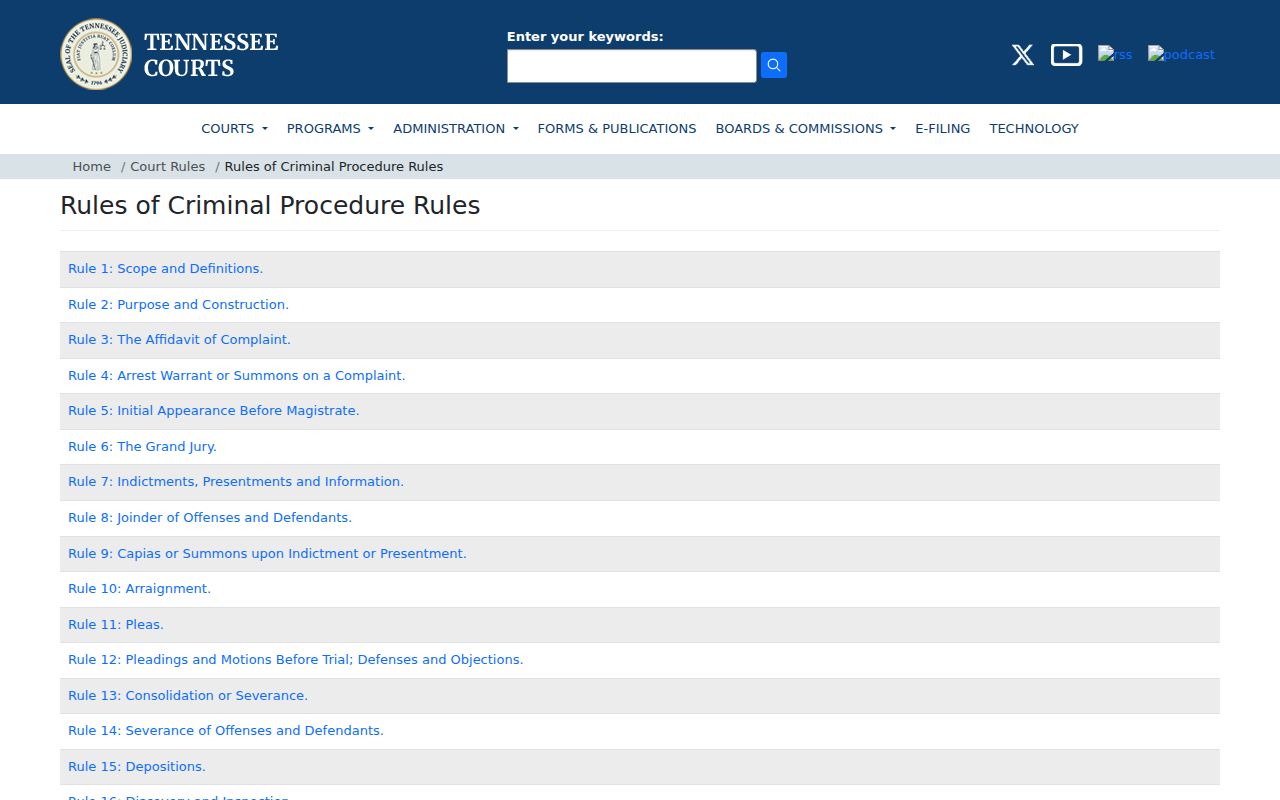
The rules index gives the state process context, while the local clerk confirms the case-specific record.
Lewis County Warrant Searches
Lewis County has no verified online warrant search. The reliable route is to ask the issuing court about its docket and call the sheriff about local service or booking records. The Circuit Court Clerk says the office issues warrants, summonses, and citations and keeps General Sessions and Circuit records. General Sessions provides a separate number for lower-court criminal questions. Hohenwald citations go to City Court.
Have the full name used on the filing, date of birth, court date, and citation or case number ready. The Circuit Clerk can give court dates and procedural routing, but cannot provide legal advice. A current status answer must come from the court or agency holding that record.
- Read the citation or summons and note the court, city, date, and case number.
- Call the Circuit Court Clerk for General Sessions or Circuit record routing.
- For lower-court process, call General Sessions at the Justice Center.
- For a Hohenwald ordinance or city ticket, contact the City Court Clerk.
- Call the sheriff about local service and ask the court about any next step.
Lewis County Warrant Call Prep
A Lewis County clerk may need more than a name to find the right case. Write down the date on the citation, the court printed on it, the alleged ordinance or statute, and any payment or appearance already made. If the Circuit Court paper says to contact an attorney for dates, have counsel make that call.
Keep personal identifiers out of public posts and unverified forms. Ask whether the office needs a date of birth or copy of the paper, and whether it can confirm a warrant or only the underlying court date.
What a Warrant Search Asks For
No Lewis County sheriff, court, or Hohenwald website exposes an online warrant form, so there are no local name, birth-date, case-number, or status filters to describe. The fields below record what the official sources do and do not offer. TBI and TDOC are separate state tools, not a county warrant search.
Do not treat those services as substitutes. Use each only for its stated purpose, and ask the issuing court to identify the record you need.
| Field Label | Type | Required | Notes |
|---|---|---|---|
| Lewis County sheriff | No public form | Not applicable | Use the official phone and contact page. |
| Hohenwald Police / City Court | No lookup | Not applicable | Call the City Court Clerk for city citations. |
| TBI TORIS | Name-based history | Interface requires entry | $29 per request; criminal history, not warrant status. |
| TDOC FOIL | Offender search | Interface defined | Custody and sentence information, not county process. |
| Appellate case search | Text and case options | Yes | Appellate records only, not a Lewis County trial warrant. |
Lewis County Form Fields
The blank Tennessee arrest-warrant form includes a county case number and state control number, the issuing court, an offense and code section, bond conditions, and an officer-return block. The separate CAPIAS/BENCH form shows a case number, court, bond amount, initial-appearance date, charge, and officer return.
These are statewide forms, not a Lewis County sample entry. The local office has not published a case-number pattern, online status menu, or update schedule. Ask the clerk which status words the court has entered.
Lewis County Warrant Search Results
There is no public Lewis County result page to display. The blank Tennessee arrest and CAPIAS/BENCH forms show the fields a court record may contain, including case number, issuing court, charge, bond, initial-appearance date, and an officer's return. The court must confirm which parts appear in a particular file and whether status changed later.
A return saying an officer could not find someone is not a recall order. Ask for the court's latest entry and the date it was entered.
| Case number | County and state control identifiers appear on the blank arrest form; Lewis County's format is not public. |
|---|---|
| Issuing court | Names the court and may identify the issuing judge, clerk, or judicial commissioner. |
| Charge | Shows offense text and a code section when the form contains it. |
| Bond | May list an amount and conditions; no countywide schedule was located. |
| Return | May show service by arrest, a not-found entry, date, and officer. |
TORIS Is Not Warrant Status
TBI TORIS is a $29 name-based criminal-history check. Its purpose is not to confirm current Lewis County warrants, and it does not include juvenile information except for the stated adult-transfer exception. TDOC FOIL reports offender custody and sentence details, not ordinary General Sessions or City Court process.
A no-record result from either site does not show that a warrant was never issued, recalled, or entered by a city court. For a current answer, contact the court and sheriff.
Image source: the TBI TORIS service, shown here as a criminal-history product rather than a warrant database.
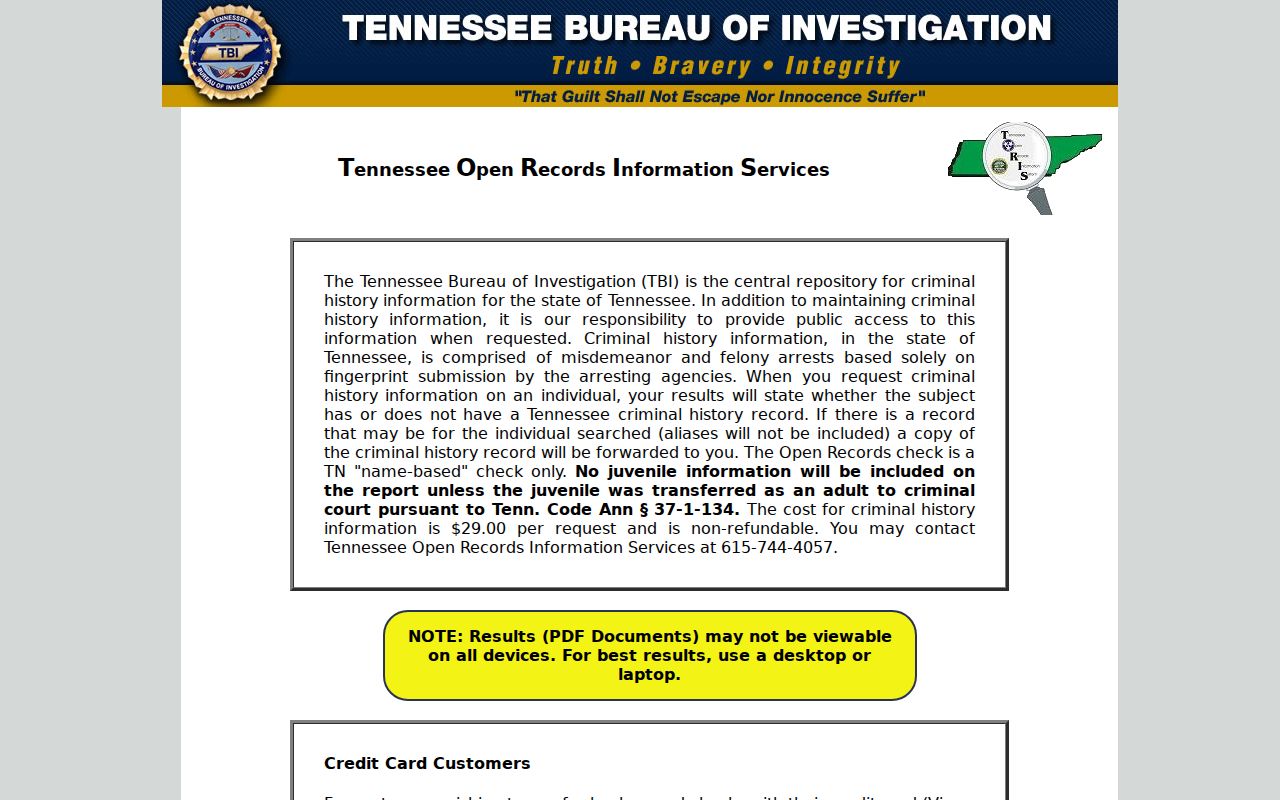
The interface does not provide a public Lewis County warrant result or a court recall order.
Lewis County Warrants: Who Holds What
The Circuit Court Clerk is at the Justice Center, 29 West Main Street, and lists (931) 796-3724 for court-record routing. General Sessions/Judicial Commissioner is at the same Justice Center, (931) 796-5547. Hohenwald City Court Clerk is at 106 North Court Street, (931) 796-3223. The sheriff at 437 Swan Avenue, (931) 796-5096, is the law-enforcement contact for service and booking.
These desks do not share one public search screen. The county clerk may direct a caller to General Sessions or Circuit; a city citation belongs with Hohenwald; an outside-county, federal, probation, or parole hold belongs to its originating agency.
Image source: Tennessee Courts Self-Help Center, which routes warrant questions to the county court clerk and city matters to a municipal clerk.
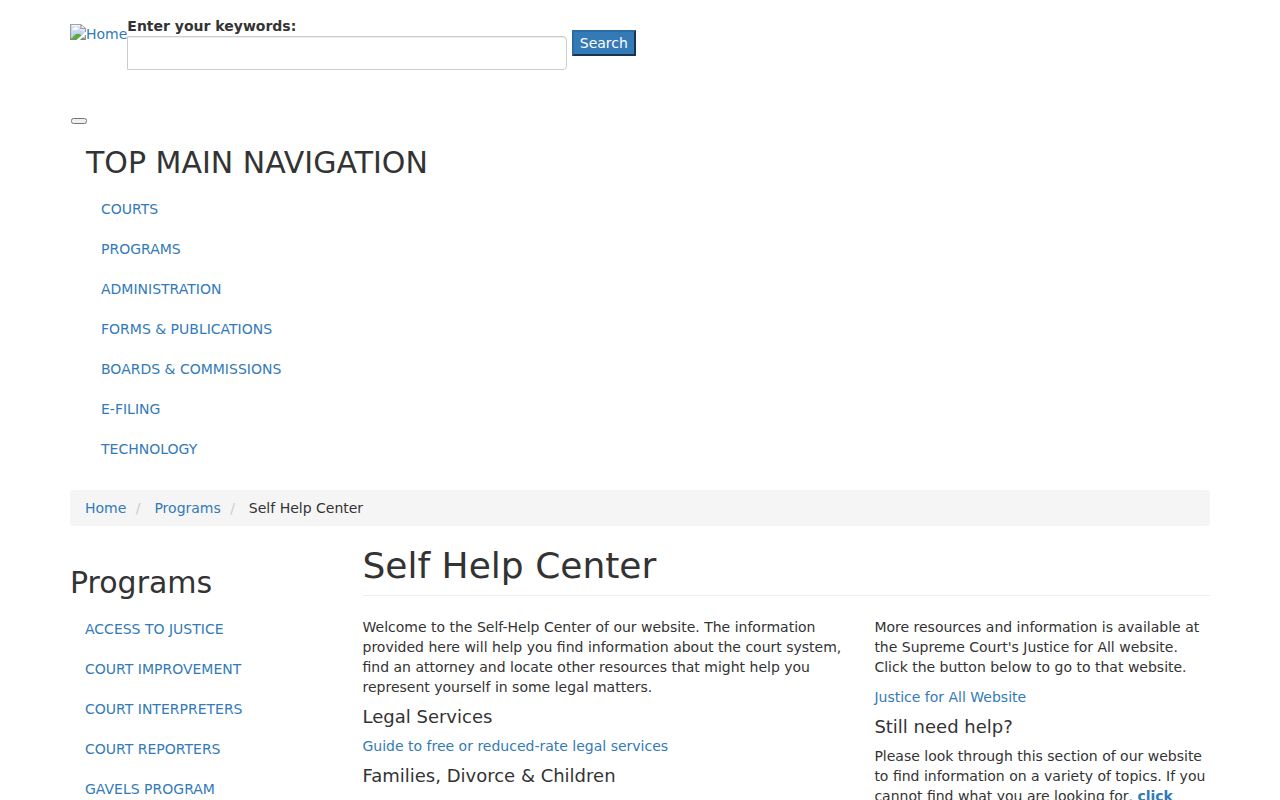
The state guidance supports asking the local office that holds the docket rather than relying on an unrelated statewide search.
Lewis County TPRA Requests
If a phone call is not enough, request an existing record from the office that holds it: the sheriff for service records, the Circuit Court Clerk or General Sessions for county court papers, or Hohenwald for a city file. No local warrant request form or online vendor portal was found. Name the record, date range, and case number if known.
The Comptroller says that when a prompt response is not practicable, the custodian must within seven business days produce the record, deny it with a basis, or explain the expected delay. Circuit Clerk copies are $0.50 per regular page and $5 plus $0.50 per certified page; those amounts are not confirmed for sheriff or city records.
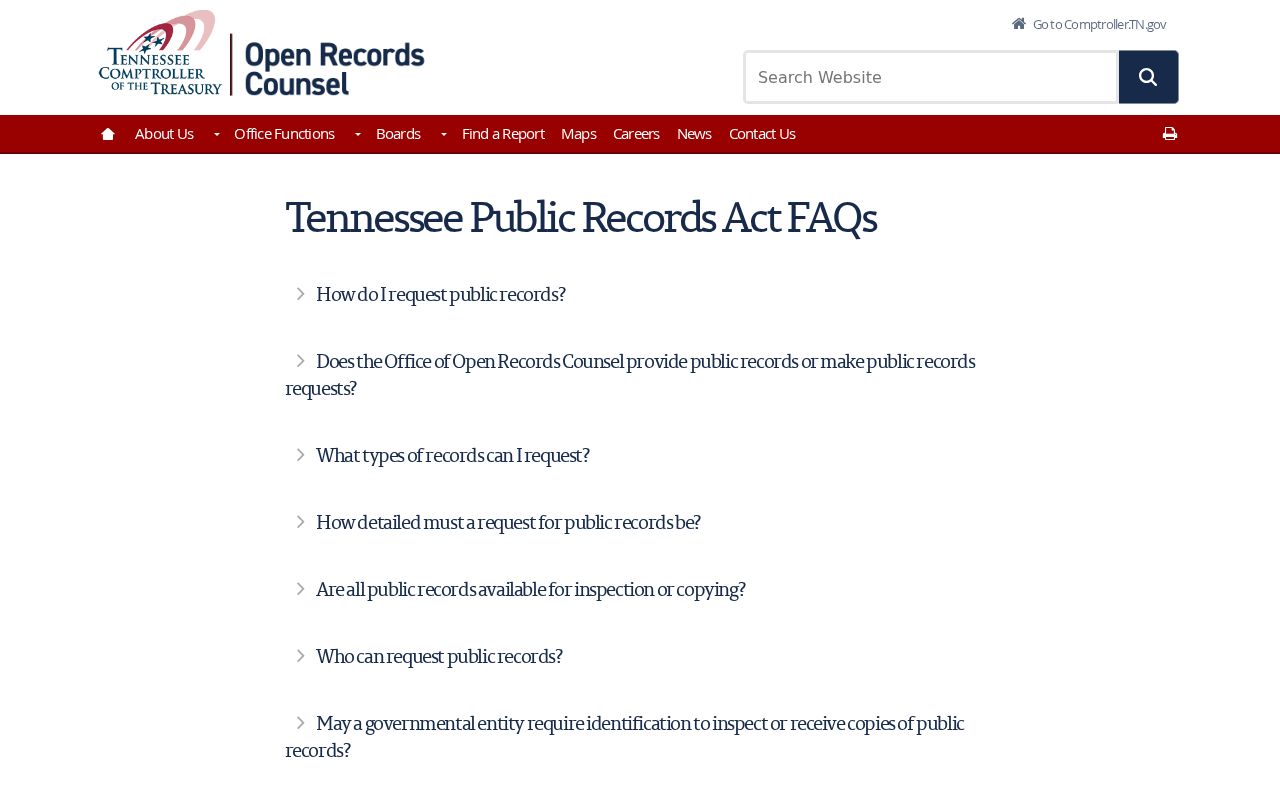
Image source: Tennessee Comptroller public-records request information, an example of the state records-request path.
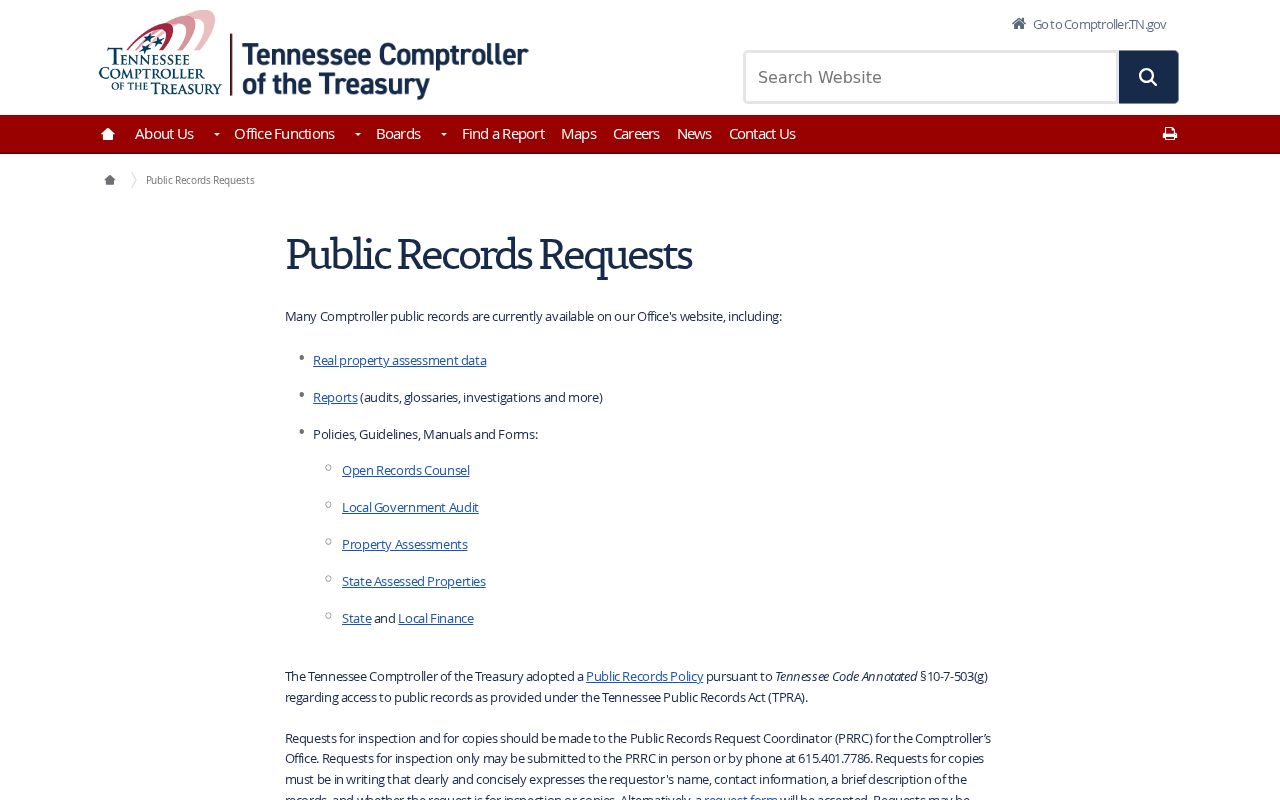
Ask for a fee estimate before copying and request a written explanation if any part is withheld.
Which Warrants Stay Restricted
The Tennessee Public Records Act covers existing records unless another law makes them confidential. Juvenile court files are generally restricted under T.C.A. §37-1-153, and sealed or active-investigation material may also be withheld. A custodian can release a public portion while redacting a protected part.
There is no Lewis County public roster to treat as complete. Recent, city, sealed, juvenile, probation, parole, or out-of-county process may sit in a different record system. Ask the issuing office to confirm what it can disclose.
Key Rules:
T.C.A. §10-7-503 permits requests for existing public records, subject to statutory exceptions.
T.C.A. §37-1-153 generally limits access to juvenile court files.
Sealed, recent, or investigative material may not be public. No-result is not proof that no warrant exists.
Image source: the Comptroller's public-records guidance, which describes access rules and request handling.
A records request can seek a file, but a court call is the better route for a same-day bond, recall, or hearing question.